Our client, a public education foundation, asked us to help reduce the administrative burden within their organisation. The goal was clear: to spend more time on what truly matters – working directly with children – and less on mandatory paperwork.


Written by
Ewout Eelkman Rooda
The first point of focus: the OPPs (development perspective plans) drawn up for pupils who need extra support. An OPP defines the support a child receives, making it transparent and accessible to parents and legal representatives.
Individual Education Plans (IEPs) represent a significant administrative burden for teachers. Our client creates 2,700 of these plans annually, with each taking 60 to 90 minutes to draft. In practice, the quality of IEPs varies considerably depending on the teacher and the information available. While templates differ between institutions, the fields typically include a combination of student details, such as their personal profile, goals, support needs, and anticipated transition pathway. Input for these fields comes from various sources, including teacher notes, parent consultations, and student records. Teachers must synthesise all these sources to produce a cohesive, actionable IEP.
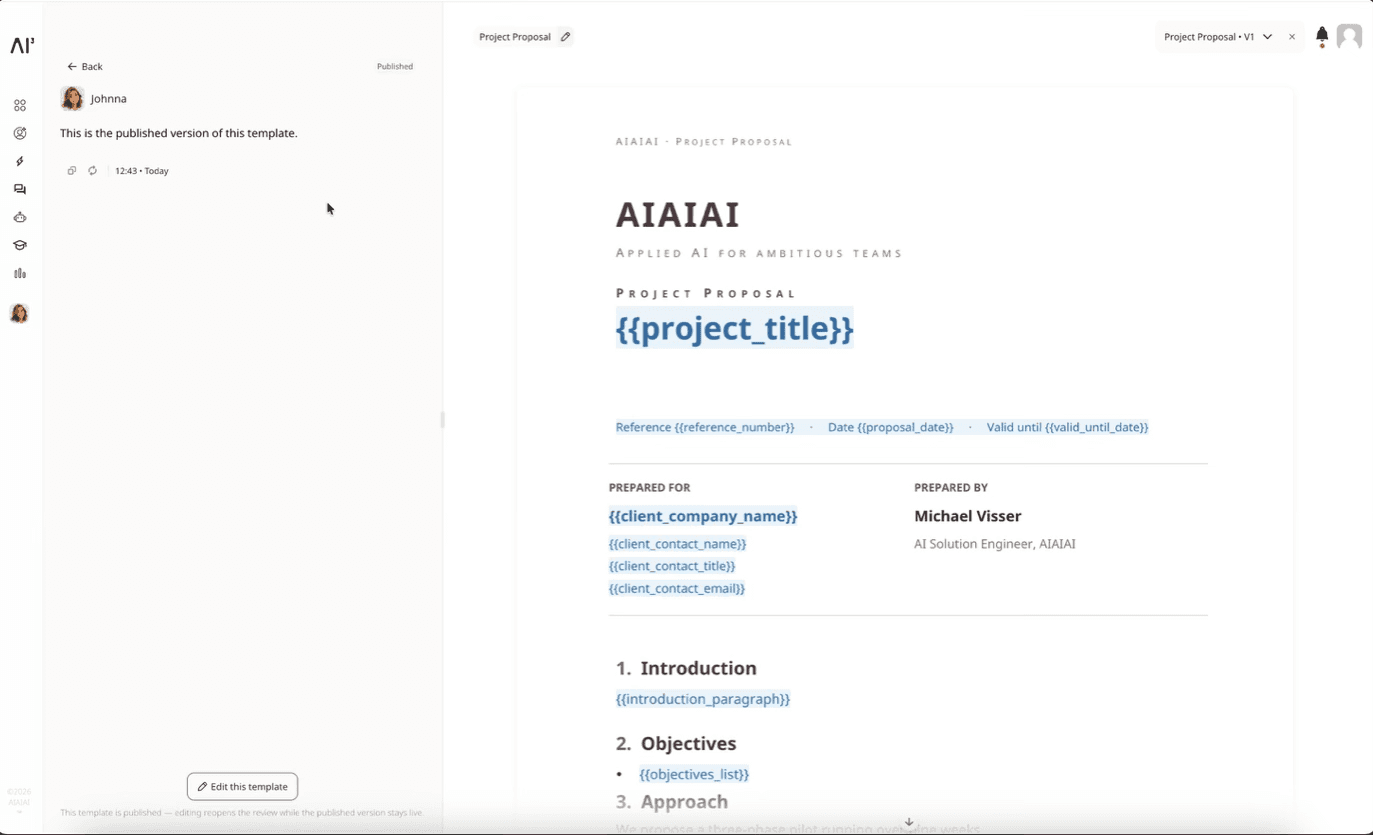
Figure 1: an agent operating within a fixed template
The client asked us to develop an agent to reduce the administrative burden of IEPs while improving their quality, given their importance to student support. In response, we built a custom agent that understands the client's template and has access to local databases. The agent analyses the student information and populates the template in line with the institution's educational approach. Where data is unclear, the agent highlights the field clearly so the teacher can address it directly.
Ultimately, the business case for the IEP agent rests on two main benefits. Firstly, the quality of the IEPs improves: they are more comprehensive and align more consistently with the institution's educational approach. Secondly, the time required to draft an IEP drops from an average of 75 minutes to around 15 minutes — saving approximately 2,700 hours a year, which teachers can redirect to direct student engagement.
Related articles


























AI that pays for itself
Work more efficiently. Everything connected. European and secure.